
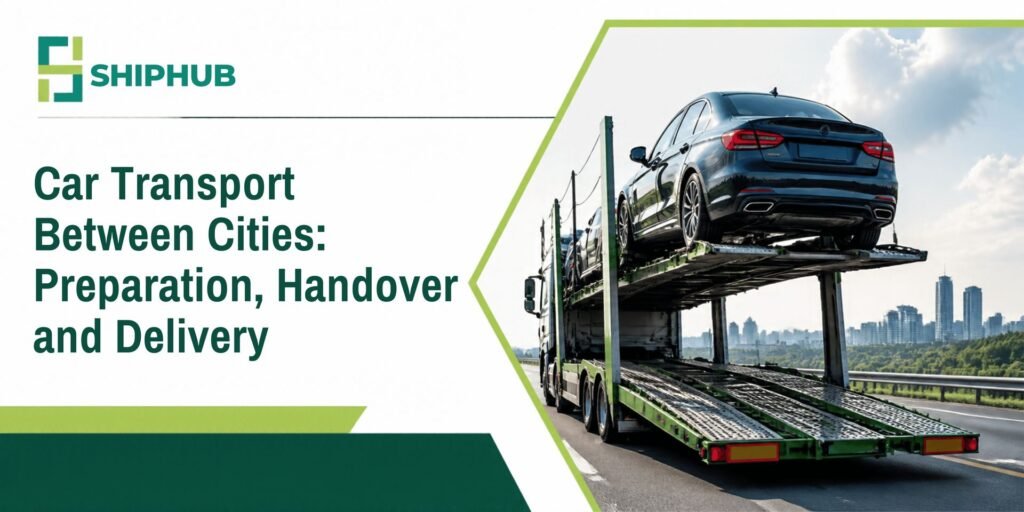
Car transport between cities may be needed after buying a vehicle, when relocating or when sending a car to a workshop. Start with an accurate description of the car and its condition, then confirm suitable loading arrangements and document both collection and delivery. This guide explains what to prepare, compare and inspect before completing your request through ShipHub.
Describe the specific transport situation
For a dealership purchase, identify who releases the car and who receives it, and complete the arrangements needed for handover. For a vehicle at a workshop, explain whether it can move and whether preparation is required before the transporter arrives. Accident damage needs an accurate description so the provider can assess loading requirements. Dealerships and workshops should record each vehicle separately rather than reuse a generic description across different cars. Keep the correct condition photos, locations and contact people associated with the right vehicle. ShipHub’s service page lists car transport and recovery-flatbed options. Confirm which option is available for the route and vehicle condition.Provide the vehicle details
Share the make, model and collection and delivery locations. Explain whether the car starts and moves normally or needs loading assistance because of a breakdown or accident. Mention low ground clearance or unusual dimensions in advance. A non-running vehicle can change the loading requirements. Share recent photos and let the provider confirm that the transport method is suitable before booking.Prepare the required documents and photos
ShipHub’s published terms require a clear vehicle registration image and recent photos from all four sides when requesting car transport by flatbed. Prepare the material through the designated app process and review the terms and conditions before submitting the request, as requirements may change. Use clear photos that reflect the current condition. Add close views where damage needs explanation. Share vehicle documents through the designated service channel rather than in public comments or with unrelated parties.Agree on the vehicle and service scope
Ask which transport vehicle is appropriate, how the car will be loaded and secured, and who is responsible for loading and unloading. Confirm coverage for both addresses, expected timing and any charges for waiting or difficult access. For a dealership or workshop request, identify the people authorised to hand over and receive the car. If several cars need transport, state the number rather than assuming a single-car offer applies to the entire job.Understand quotation differences
Route, vehicle type and condition, loading equipment and access can affect the transport work. A car that moves normally may need different arrangements from one that cannot move. Compare offers using the same vehicle information, condition and addresses. Ask whether additional loading requirements are included. A price published for another transport situation is not a confirmed quote for your journey.Record the condition before collection
Photograph the exterior, tyres, glass and existing damage. Record the odometer reading and remove personal belongings and documents that are not required for the transport. Agree how the keys will be handed over and which information the provider needs. A waybill records shipment details and the transport operation, helping support customer and driver rights under the applicable terms and conditions. Check the vehicle details, parties and locations. Ask about liability terms and any available insurance coverage and limits. A waybill alone does not mean comprehensive insurance is included.Coordinate with a dealer or workshop
Choose a collection window during the site’s operating hours. Ensure the car, keys and required documents are ready, and provide the authorised handover contact through the appropriate request process. If the vehicle moves to another location or its condition changes, notify the provider and confirm the revised arrangement. If it will not be ready, coordinate the change before the driver travels on the basis of outdated information.A checklist for car transport between cities
- Match the vehicle details to the request and required documents.
- Describe running condition and damage affecting loading or unloading.
- Prepare current photos from four sides and close views of visible issues.
- Choose locations suitable for the transporter to stop and perform the work.
- Identify the authorised collection and delivery contacts.
- Review the service scope, final amount and estimated timing before confirmation.