
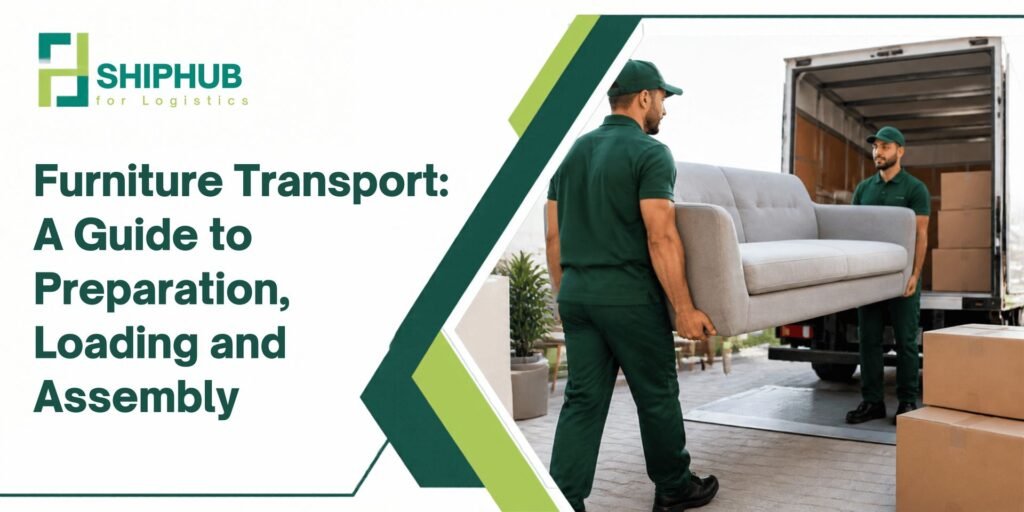
Buying a sofa from a shop or a second-hand wardrobe also means arranging its journey to the new location. Before booking furniture transport, decide whether you need a vehicle only, loading help or assembly as well. Clear requirements make it easier to compare offers.
One item, a household move or a shop delivery?
Moving a second-hand table differs from moving a room’s contents or delivering office furniture. For one item, focus on dimensions and access. For several pieces, create an inventory and identify anything requiring dismantling or special protection. A furniture retailer should also define where the delivery ends. Is handover at the building entrance or at an agreed location inside? Is assembly required? Clarifying the scope helps the shop, customer and transport provider work to the same expectation. Review ShipHub’s transport and optional handling services, then select the work relevant to the request.Describe and photograph the furniture
List each item and quantity, and share photos showing its size and condition. Measure large pieces and check doorways and lift space, especially for sofas, wardrobes and dining tables. Tell the provider about glass or fragile components. Explain whether the furniture is already dismantled or needs preparation before collection. A general room photo may not show the dimensions or access difficulties clearly enough.Measure the furniture and its route out
Measure each item in the form in which it will travel, allowing for packaging and protruding parts. Check the narrowest point along the route, including room doors, corridor turns and the lift entrance. A piece may fit through the building’s front door but still be unable to reach the intended room. Send access photos and measurements before booking if the route looks difficult. Ask about a suitable alternative for the item and building. Any need for special equipment or handling requires separate confirmation of availability and scope; it should not be left for the driver to resolve on arrival.Separate transport from additional work
Confirm exactly what the offer includes:- A vehicle suitable for the furniture.
- Loading, unloading and the labour required.
- Packing and packing materials, if needed.
- Dismantling or assembly, including which items are covered.
Explain access at both addresses
State the floor, whether a suitable lift is available and how far the vehicle can park from the entrance. Check any building rules affecting the moving time. For second-hand purchases, agree on a collection window when the seller is available. Confirm who prepares the furniture and provides access. At the destination, clear enough space to receive the items before the vehicle arrives.Understand the quotation factors
The number and size of pieces, distance, vehicle, floors, lift access, handling labour and additional services can all affect the scope. Similar furniture can involve different work in two buildings. Use the same description when comparing offers and ask what is excluded. If you add items or change an address, notify the provider before arrival and confirm any change to price or arrangements. Agreeing only on a general service name leaves important details unresolved.Compare offers on the same basis
A vehicle-only offer differs from one that includes handling and assembly. Compare the same items and service requirements, then check expected timing and possible charges for stairs, waiting or changes to the request. Photograph the furniture before loading and inspect it on arrival. Retain those records and report any observations during handover using the agreed procedure.Prepare furniture and small components
Empty drawers and cupboards and pack their contents separately. Keep screws, fittings and accessories in labelled bags associated with the right item. Photos of the assembly can help when components need to be put back together. Do not dismantle complex furniture without understanding the correct method. Ask whether the required work can be provided for that item, or arrange suitable preparation before collection. Some furniture requires manufacturer instructions or a specialist familiar with the design. Protect glass, mirrors, edges and surfaces according to the item’s requirements. Tell the provider about components that cannot withstand pressure. Suitable packaging still needs to be supported by an appropriate vehicle and safe securing arrangements.A furniture transport checklist for shop deliveries
- Provide an item list, packaged dimensions and relevant purchase details.
- Confirm the collection entrance and the person authorised to release the furniture.
- State the floor, lift access, parking position and final handover point.
- Agree on packing, dismantling, loading and assembly as separate requirements.
- Clear the destination space and keep the carrying route accessible.